Product overview
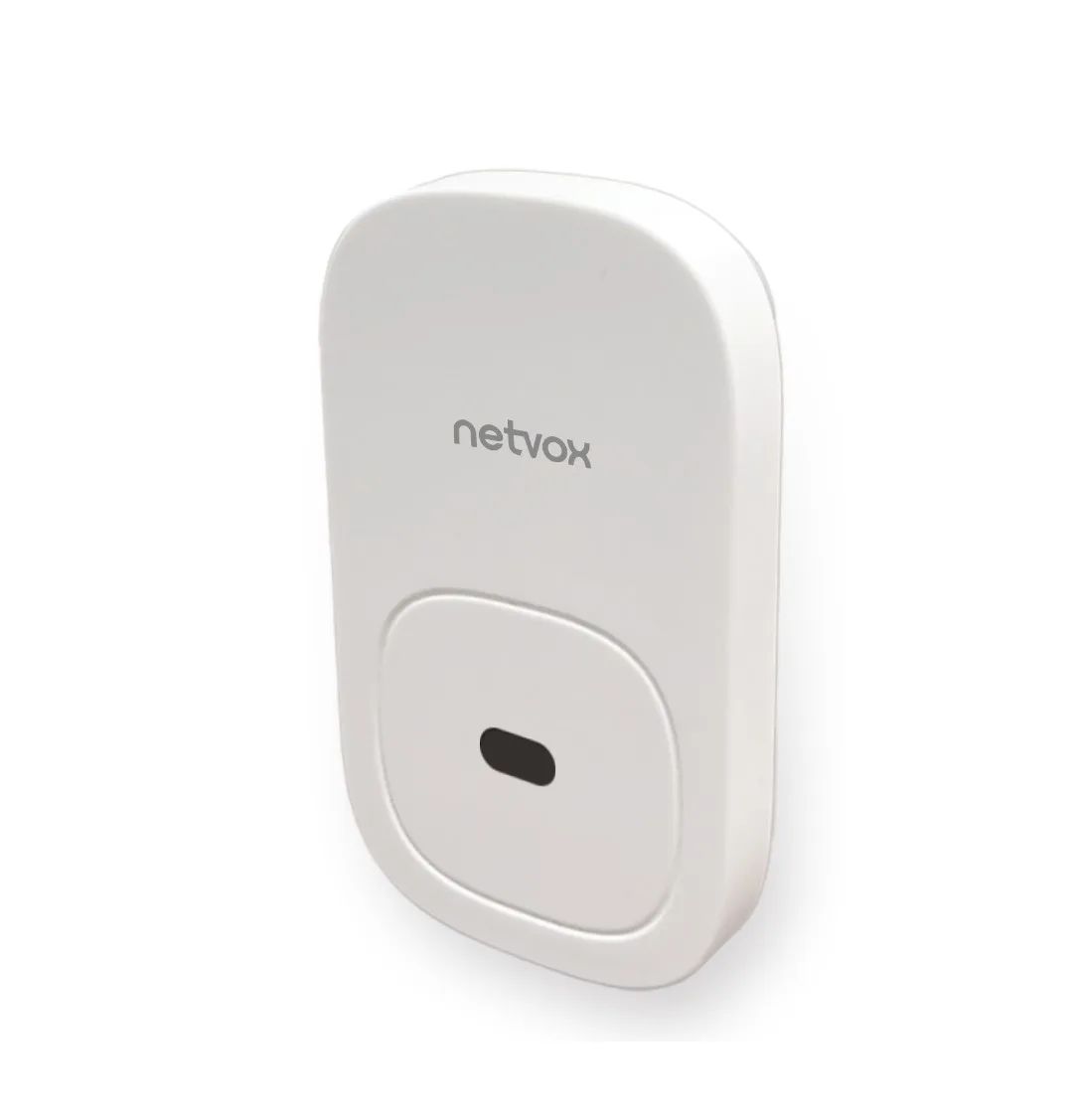
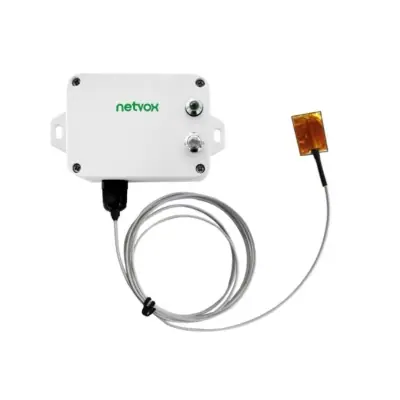
Overview. The Netvox R315LA is a wireless proximity sensor that detects the presence or approach of an object by measuring the distance between the sensor and that object. It is a compact, lightweight time-of-flight (ToF) sensor that can be fixed to a surface without complicated installation.
Main characteristics. Measurement range of 0 to 62 cm, 25° pyramid-shaped field of view, 850 nm wavelength. The sensor measures battery voltage with a ±0.1 V accuracy and raises a low-voltage alarm at 2.6 V. Dimensions are 75.5 mm x 44 mm x 16.35 mm.
Interfaces and connectivity. LoRa and FSK modulation, LoRaWAN Class A compatible, with a 10 km communication range in line of sight. Receive sensitivity reaches -123 dBm, and data rates range from 0.3 to 50 kbps for LoRa and 0.6 to 300 kbps for FSK. Bands EU863-870, US902-928, AU915-928, KR920-923, AS923-1/2/3, IN865-867 and CN470-510 are available, to be configured before shipment. Parameters can be read and configured through third-party platforms Actility/ThingPark, TTN and MyDevices/Cayenne.
Power and environment. Powered by 2 parallel 3 V CR2450 coin cells, with a stated battery life of 2 years. Sleeping current is 15 µA and operating current is 1.7 mA. Operating temperature from -20 °C to +55 °C, storage temperature from -40 °C to +85 °C, ambient humidity below 90 % RH without condensation, IP30 rating.
Typical uses. Presence or approach detection over short distances, for example detection of toilet paper rolls, with data sent to a LoRaWAN network and alerts by SMS or email (optional).